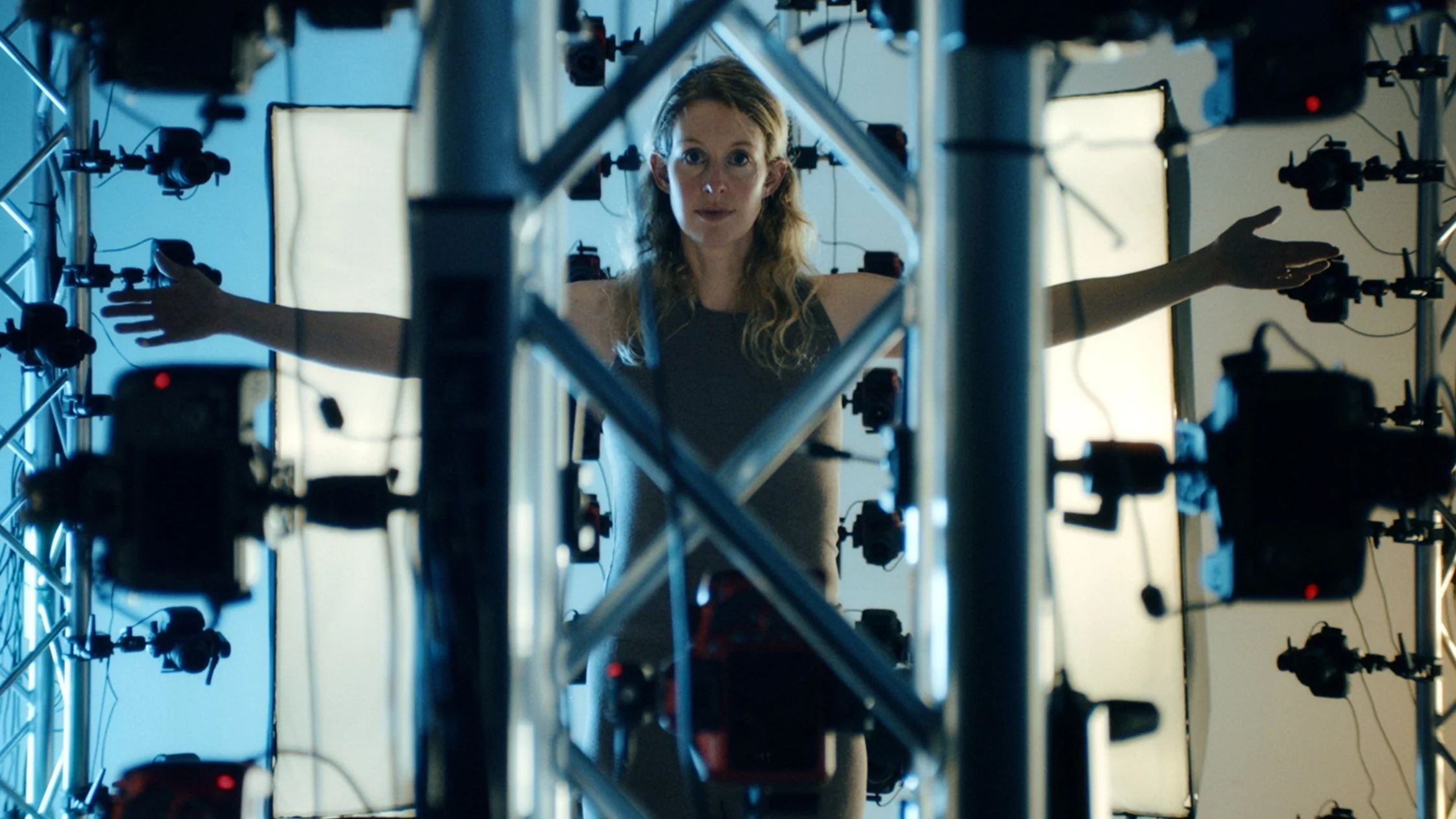
Judy and I saw You Can See Everything at our local cineplex Saturday night. We talked about it all the way home and for an hour afterward. I spent my treadmill time Sunday mulling it over. Monday afternoon, I returned to see it again.
The movie is a three-hour documentary about... well, that’s one of the many things that will leave you scratching your head. Ostensibly, it is about Elizabeth Holmes, the founder of the blood-testing startup Theranos who became a billionaire and media darling after promising her company would revolutionize healthcare. Theranos proved to be an elaborate fraud, landing her an 11-year federal prison sentence. Thirty-four days before she was scheduled to report to prison, she and her partner, Billy Evans, invited a camera crew into their rented beach house to record the days leading up to her incarceration. They promised the directors, “You can see everything.”
The movie is equally about Evans, the father of her two children—one of whom she birthed a few weeks before entering prison. The third subject among equals is Nathan Fielder, the co-director, and his reactions as he eavesdrops on private moments and talks with Holmes and Evans to get their perspectives on what happened and their future. Spoiler alert: The movie also features someone who comes out of left field that will give you yet something else to wonder about.
I ‘ve been fascinated with Holmes long before I walked into the theater. I read Bad Blood by John Carreyrou about her meteoric rise and spectacular fall, watched an HBO documentary, and read dozens of articles about her bizarre persona, criminal trial, and pregnancies. Many believed the births—one during her trial and one after her conviction—were cynical attempts to persuade a judge not to enforce her sentence, because who, after all, would separate innocent babies from their mother?
I left the theater Saturday thinking that what was obvious in the movie was true. I left the second time feeling like everything I’d seen and concluded originally wasn’t true after all. Now, I want to see it again. (It’s a good thing I qualify for a senior ticket.)
If your idea of a satisfying movie is an action, sci-fi, horror, or comedy flick, Everything probably isn’t for you. But if you’re willing to risk three hours on the chance you’ll be mesmerized by a documentary that has turned the film industry upside down, and will turn you inside out and outside in, leaving you unsure about what you’ve seen and what you haven’t, you are going to be glad you saw it.
