If someone told my father something he didn’t want to hear, he simply ignored the messenger and continued what he was doing.
I saw it myself sixty-three years ago today, on November 22, 1963. I had just turned 12 and was home from school with the mumps.
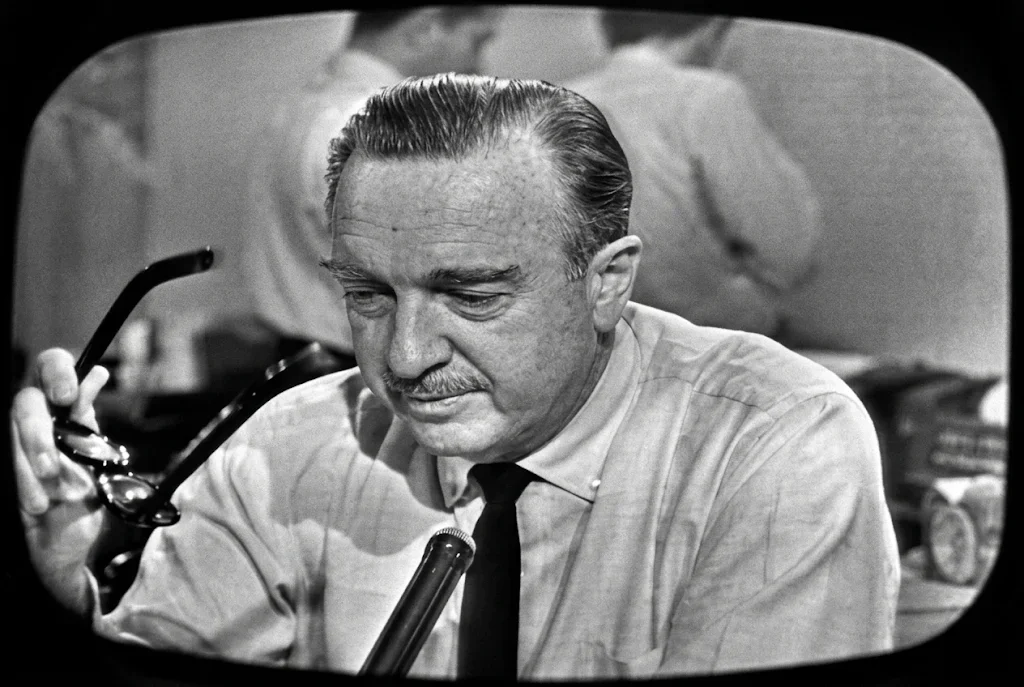
Dad, who ran a general store in Auxvasse, Missouri, had come home for lunch as he did every day. He and my mother were eating at the kitchen table. I was in the next room, watching television, when CBS anchor Walter Cronkite broke into the programming to announce John F. Kennedy had been shot.
Bud and Ruby Dryden married in 1933, a few months after FDR took office, at the height of the Great Depression. They credited FDR and the Democrats with nothing less than saving America and giving them a chance to make something of themselves. Needless to say, they adored Kennedy, the young Democratic president. The night of his election, they held a viewing party and invited friends over to watch the returns. It was the only time I ever remember them hosting a gathering for anyone other than family.
I ran into the kitchen. “Walter Cronkite says the president has been shot.”
My mother clasped both hands over her mouth.
“You didn’t hear that,” my father said dismissively, as if I’d announced space aliens had landed in the front yard.
She looked as horrified by his reaction as she was by the news. “Bud,” she said slowly, like a mother trying to reason with an out-of-sorts child. “It has to be true. Why would the boy make that up?”
He responded by spearing another pork chop. Nobody said another word. The only sound in the kitchen was the clink of his fork against the plate until he finished his meal, wiped his mouth, and went back to the store.
Funny what one does and doesn’t remember about the biggest events of a lifetime. I’m almost sure Mom and I spent the rest of the afternoon glued to the television, and that she called him at the store once the news from Dallas became official. The details have faded, yet I’ll never forget watching my father eat his lunch as if the world weren't changing in the next room.
I wish I could have sat down with him as an adult and asked him what was going through his mind, but I never got the opportunity. He died a little more than two years later.
I've spent the rest of my life trying to figure out that moment, and while I suppose I never fully will, I do—in a strange way—understand it. For a man who had survived the Depression and built a life from scratch, some losses were simply too big to let through the front door. If he didn't acknowledge it, maybe, for just a few minutes longer, it didn't have to be true.
